

Your High School Course Selection Is More Strategic Than You Think

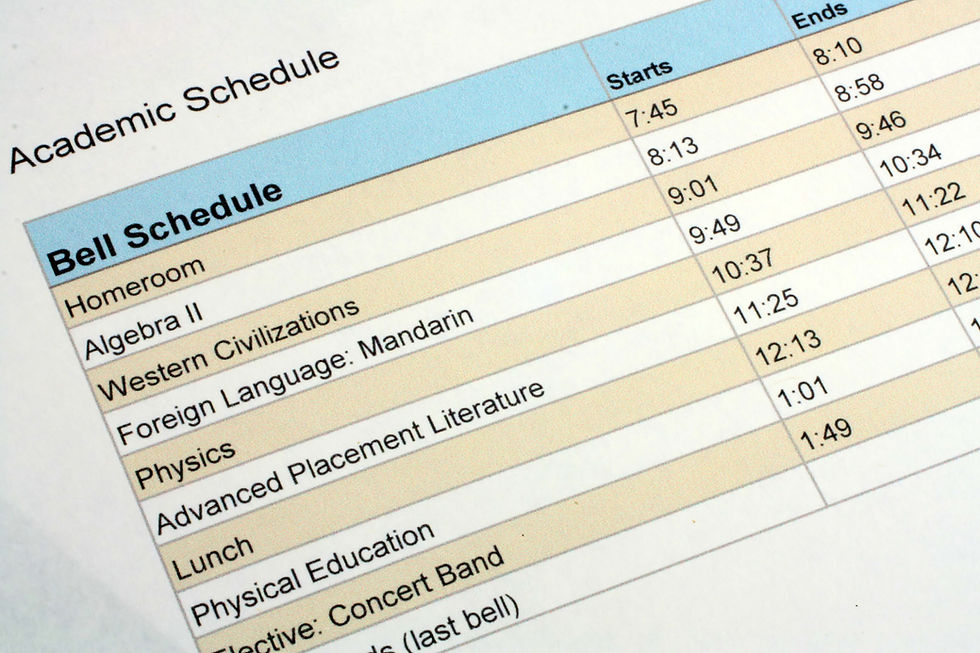
When that course selection form arrives each spring, many families treat it as routine paperwork, just picking classes that fit a schedule or sound interesting. Here's what most discover too late: your high school course choices are among the most powerful tools you have for shaping your college opportunities.
The reality of today's college admissions? Florida State University's most recent Early Action cycle received 79,000 applications and admitted just 12,900 students, a 16% acceptance rate. While no single profile guarantees admission, these patterns reflect how competitive applicants typically prepare academically. Here's what admitted students actually looked like:
FLORIDA STATE UNIVERSITY
2026 Early Action Data

The courses you select starting in ninth grade build your academic foundation, determine college eligibility, and influence admissions outcomes. Strategic planning opens doors; haphazard choices can quietly close them. And the good news? Your school counselor is your most valuable partner in this process. (Throughout this guide, we refer to school counselors, though some schools may also have a college counselor or advisor.)
Why Your Course Schedule Actually Matters
Colleges Evaluate Rigor, Not Just GPA
A 4.0 GPA doesn't tell the whole story. Colleges evaluate students "in context"—they examine which courses you took, not just the grades earned (NACAC, 2023). Two students with identical 3.8 GPAs look very different when one earned those grades in standard classes while the other succeeded in Honors and AP courses.
At Florida State University, admitted students in the most recent Early Action cycle had an average weighted GPA of 4.5. This means they earned strong grades (mostly A's and B's) in rigorous courses such as Honors, AP, AICE, or Dual Enrollment classes, which are weighted to push GPAs above 4.0. The typical profile included 3.5 credits of world language, 4.5 credits of English, six credits of math, and five credits of science, with 79% of students taking these courses at advanced levels.
Your school counselor/college advisor reviews your transcript from this same lens. They know what colleges are looking for and can help you find the right balance of challenge across core subjects, including:
• English: 4 years
• Math: 4 years
• Lab Sciences: 2–3 years
• Social Studies: 2–3 years
• World Language: 2–4 years
This doesn’t mean taking every AP class available. It means demonstrating consistent growth and choosing coursework that challenges you appropriately over the course of four years.
Specific Requirements Can Affect College Eligibility
Many universities have non-negotiable course prerequisites. The UC and CSU systems require specific "A-G" courses. The UNC System mandates particular coursework for Fall 2026 applicants. Cornell's engineering program requires four years of math, including calculus, while their agriculture programs require pre-calculus (Cornell Admissions, 2025).
Missing even one required course can make you ineligible for admission, regardless of your GPA or test scores. This is exactly why meeting with your counselor early and regularly matters - they track these requirements and can alert you to potential gaps before it's too late to fix them.
Your Courses Should Reflect Your Interests
Strategic course selection creates a narrative about who you are and where you're headed. STEM-focused students need a strong math and science progression. Liberal arts students demonstrate preparation through advanced English, history, and languages. Undecided students benefit from balanced college-preparatory curricula that preserve flexibility. For example, a student interested in psychology might demonstrate preparation through advanced social science alongside strong writing-intensive coursework.
Your school counselor can help you craft this story. They understand how course sequences connect and can recommend classes that align with your goals while keeping doors open.
Advanced Math Has Become a Benchmark
AP Calculus has become an unofficial standard for competitive admissions, particularly for STEM, business, and economics programs. Not reaching Calculus won't automatically disqualify you, but its absence can make your application less competitive.
Real data illustrates this clearly: Among Florida State University's recent Early Action admitted students, 67% had completed Calculus or higher. The typical admitted student completed six math credits - significantly more than the minimum required for graduation at most high schools.
The challenge? Math placement decisions in middle school determine whether you reach Calculus by senior year. One student I worked with, who was interested in highly selective universities, wasn't accelerated in middle school math. By tenth grade, he wasn't on track for Calculus. Working with his counselor, he enrolled in Algebra 2 during summer school, which positioned him for Pre-Calculus junior year and AP Calculus senior year. That strategic adjustment helped him earn admission to Northwestern University.
Families should schedule a meeting with their counselor to map out their math trajectory now - not junior year, when options are limited.
Balance Matters as Much as Rigor
More rigor isn't automatically better. The University of Georgia asks: "How do you relay the idea that colleges want you to challenge yourself but not overdo your coursework load to the detriment of your work/play balance and mental health?" (UGA Admissions, 2019). Overloading can lead to burnout, declining performance, and insufficient time for extracurriculars. Selective colleges value students who succeed in challenging environments while maintaining balance.
Your counselor knows you, knows the teachers, and knows the actual workload of different courses. They can help assess whether you're stretching yourself appropriately or setting yourself up for trouble.
A note on Dual Enrollment: If you're considering taking college courses while in high school, you have begun shaping your college gpa; therefore, performance matters. Florida State University notes that it prefers A's and B's in dual enrollment courses — a C doesn't automatically disqualify applicants, but it's viewed as a weaker indicator of college readiness. Take dual enrollment seriously and ensure you have the time and support to succeed.
Think Four Years, Not One Year at a Time
This long-range planning doesn’t stop once senior year begins. The biggest mistake? Treating course selection as a standalone annual decision rather than a four-year progression. Taking Honors Biology in ninth grade affects whether you can take AP Biology later. Beginning a world language in eighth grade instead of ninth grade can determine whether a student completes the four-year sequence that many selective colleges recommend.
Work with your counselor to create a four-year plan. They can identify prerequisite chains, flag potential conflicts, and help you adjust as your interests evolve.
This long-range planning doesn’t stop once senior year begins.
Senior Year Still Counts
Don't believe the myth that senior year grades don't matter. All colleges see your senior schedule before deciding. Most review mid-year grades before issuing acceptances. Many make offers contingent on maintaining performance. Significant grade drops can mean rescinded admission.
Your School Counselor — and When Additional Support Makes Sense
Your school counselor should be involved early and consistently throughout high school. Counselors understand your school’s curriculum, graduation requirements, and how colleges evaluate students within that context. They help identify gaps, manage course sequencing, and submit critical materials such as school profiles and counselor recommendations.
Because counselors often support large caseloads, some families choose to add individualized guidance to supplement, not replace, school-based advising. Additional one-on-one planning may be helpful if:
Your counselor has limited availability due to a large caseload
Your family would benefit from bilingual guidance (español/English)
You are navigating unique circumstances, such as athletic recruitment, international status, or specific learning needs
You want a customized four-year academic plan with regular check-ins
Your family is new to the U.S. college admissions process
This approach works best when roles are clearly defined: school counselors manage school-specific requirements and official documentation, while independent educational consultants provide focused, personalized planning aligned with a student’s goals.
Final Thoughts
Those spring course selection forms may look routine, but the decisions behind them are anything but. High school course selection isn’t about perfection - it’s about foresight.
When students and families make informed, intentional choices early, they preserve opportunities rather than scrambling to recover them later.
Your transcript tells a story long before applications are submitted. Make sure it reflects growth, purpose, and thoughtful planning—and remember, you don’t have to navigate that story alone.
For families seeking personalized, bilingual college planning support in addition to school-based advising, more information is available upon request.
Sources Referenced:
National Association for College Admission Counseling (NACAC). (2023). "High School Classes Required for College Admission."
California Department of Education. (2025). "College Admission Requirements."
University of North Carolina System. (2024). "Admissions Requirements."
Cornell University Undergraduate Admissions. (2025). "College and School Admissions Requirements."
Purdue University Undergraduate Admissions. (2025). "High School Course Requirements."
University of Georgia Admissions Blog. (2019). "What Should I Take? Course Rigor and a Balanced Life."
Empowerly. (2025). "Breaking Down College Acceptance Rates 2025: Emerging Admissions Trends."
Dahlia Orris is an Independent Educational Consultant (IEC) and the founder of Mrs. Orris Post-Secondary Education Advising, LLC, supporting students and families in grades 8–12 through bilingual college advising.
With over 24 years of experience in education, she partners with families across Florida, Georgia, and Puerto Rico, providing culturally responsive, strategic guidance in English and Spanish.
Dahlia values authentic, collaborative relationships and is known for offering honest guidance that keeps student well-being and family goals at the center of the planning process.


Comments